




在Debian操作系统中利用Swagger实现API文档的导出,主要包括以下操作步骤:
1. 安装Swagger相关工具
首先需要安装Swagger命令行工具。可以通过pip来完成Swagger UI或Swagger Editor的安装。
sudo apt update
sudo apt install python3-pip
pip3 install swagger-ui-express
2. 编写Swagger配置文件
你需要准备一个用于描述API接口的Swagger配置文件,通常为YAML格式,例如命名为swagger.yaml:
swagger: '2.0'
info:
  title: Sample API
  description: A sample API to demonstrate Swagger integration
  version: '1.0.0'
host: api.example.com
basePath: /v1
schemes:
  - https
paths:
  /users:
    get:
      summary: List all users
      responses:
        '200':
          description: An array of users
          schema:
            type: array
            items:
              $ref: '#/definitions/User'
definitions:
  User:
    type: object
    properties:
      id:
        type: integer
        format: int64
      name:
        type: string
      email:
        type: string
        format: email
3. 启动Swagger UI服务
通过使用Swagger UI Express来运行本地服务器,从而能够在浏览器中查看Swagger UI页面。
node_modules/.bin/swagger-ui-express --swagger-file ./swagger.yaml --port 8080
4. 浏览Swagger UI界面
打开浏览器,访问地址http://localhost:8080,即可看到展示在界面上的API文档内容。
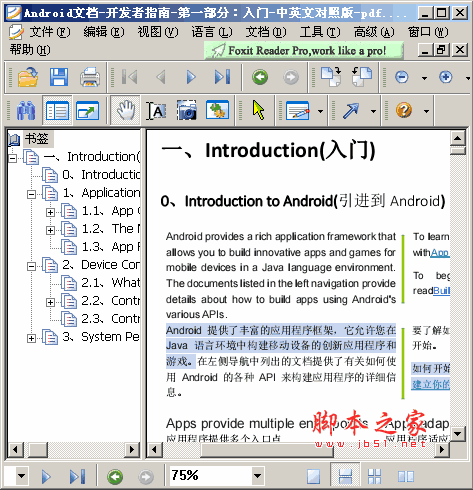
Android 开发者指南 第一部分:入门
下载
Android文档-开发者指南-第一部分:入门-中英文对照版 Android提供了丰富的应用程序框架,它允许您在Java语言环境中构建移动设备的创新应用程序和游戏。在左侧导航中列出的文档提供了有关如何使用Android的各种API来构建应用程序的详细信息。第一部分:Introduction(入门) 0、Introduction to Android(引进到Android) 1、Application Fundamentals(应用程序基础) 2、Device Compatibility(设备兼容性) 3、
5. 导出API文档内容
如需将API文档导出为文件形式,可借助Swagger Codegen工具生成客户端代码或文档。
安装Swagger Codegen组件
pip3 install swagger-codegen
使用Codegen生成API文档
可通过Swagger Codegen生成指定格式的API文档,比如HTML格式:
swagger-codegen generate -i ./swagger.yaml -l swagger -o ./api-docs
该命令会在./api-docs目录下创建HTML格式的API文档。
小结
上述流程展示了如何在Debian系统中使用Swagger完成API文档的导出操作。根据实际需求,你可以灵活修改配置文件以及输出文档的具体格式。




