
本篇文章给大家带来的内容是关于java中消费者问题的代码分析,有一定的参考价值,有需要的朋友可以参考一下,希望对你有所帮助。
1.资源
public class Resource {
    //当前资源的数量
    int num = 0;
    //当前资源的上限
    int size = 10;

    //消费资源
    public synchronized void remove() {
        //如果num为0,没有资源了,需要等待
        while (num == 0) {
            try {
                System.out.println("消费者进入等待");
                this.wait();
            } catch (InterruptedException e) {
                e.printStackTrace();
            }
        }
        //如果线程可以执行到这里,说明资源里有资源可以消费
        num--;
        System.out.println("消费者线程为:" + Thread.currentThread().getName() + "--资源数量:" + num);
        this.notifyAll();
    }

    //生产资源
    public synchronized void put() {
        //如果资源满了,就进入阻塞状态
        while (num == size) {
            try {
                System.out.println("生产者进入等待");
                this.wait();

            } catch (InterruptedException e) {
                e.printStackTrace();
            }
        }

        num++;
        System.out.println("生产者线程为:" + Thread.currentThread().getName() + "--资源数量:" + num);
        this.notifyAll();
    }
}
2.消费者
public class Consumer implements Runnable {

    private Resource resource;

    public Consumer(Resource resource) {
        this.resource = resource;
    }

    @Override
    public void run() {
        while (true){
            resource.remove();
        }

    }
}
3.生产者
public class Producer implements Runnable {

    private Resource resource;

    public Producer(Resource resource){
        this.resource=resource;
    }

    @Override
    public void run() {
        while (true){
            resource.put();
        }
    }
}
4.测试
public class TestConsumerAndProducer {

    public static void main(String[] args) {
        Resource resource = new Resource();
        //生产线程
        Producer p1 = new Producer(resource);
        //消费线程
        Consumer c1 = new Consumer(resource);

        new Thread(p1).start();

        new Thread(c1).start();
    }
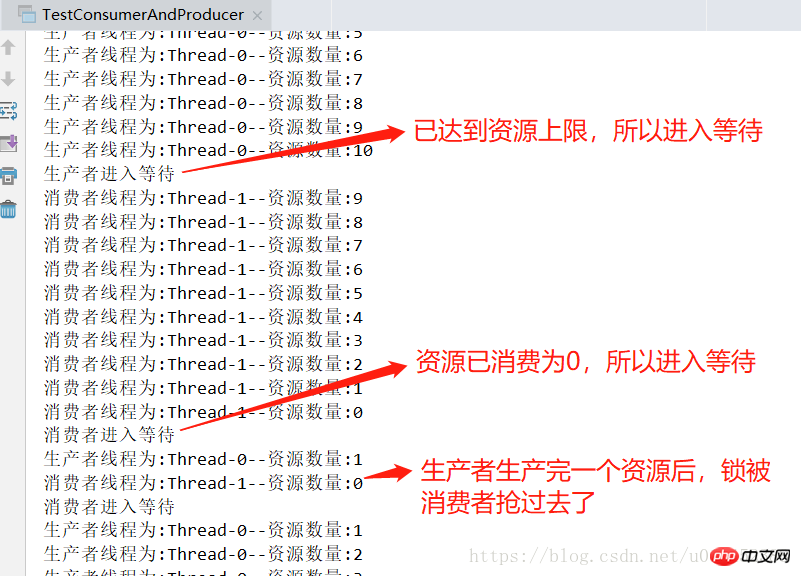
}
相关推荐:

编程高手箴言 chm版
下载
本书是作者十余年编程生涯中的技术和经验的总结。内容涵盖了从认识CPU、Windows运行机理、编程语言的运行机理,到代码的规范和风格、分析方法、调试方法和内核优化,内有作者对许多问题的认知过程和透彻的分析,以及优秀和精彩的编程经验。