

摘要:通过本章的学习,实现了登录模块,控制器代码如下:<?php namespace app\admin\controller; use app\admin\model\user\UserModel; use think\Controller; use think\facade\Request; use think\facade\Sessio
通过本章的学习,实现了登录模块,控制器代码如下:
<?php

namespace app\admin\controller;


use app\admin\model\user\UserModel;
use think\Controller;
use think\facade\Request;
use think\facade\Session;

class Login extends Controller
{
    public  function  Login()
    {
        return $this->view->fetch();
    }

    public  function  doLogin()
    {
        $data = Request::param();
        $res= UserModel::where('username', $data['username'])->find();
        if(!$res)
        {
            return ['res'=>'0','msg'=>'用户名不存在'];
        }

        if($data['password']==$res->password)
        {
            Session::set('user',$res);

            return ['res'=>'1','msg'=>'登录成功'];
        }else
        {
            return ['res'=>'0','msg'=>'用户名或密码错误,请重新输入'];
        }

    }
}
通过新增公共控制器类检验用户是否登录:
<?php

namespace app\admin\controller;


use think\App;
use think\Controller;
use think\facade\Session;

class Check extends Controller
{
    public function __construct(App $app = null)
    {
        parent::__construct($app);

        if(!Session::has('user'))
        {
            $this->error('您还未登录,请先登录','Login/Login');
        }


    }
}
效果图:
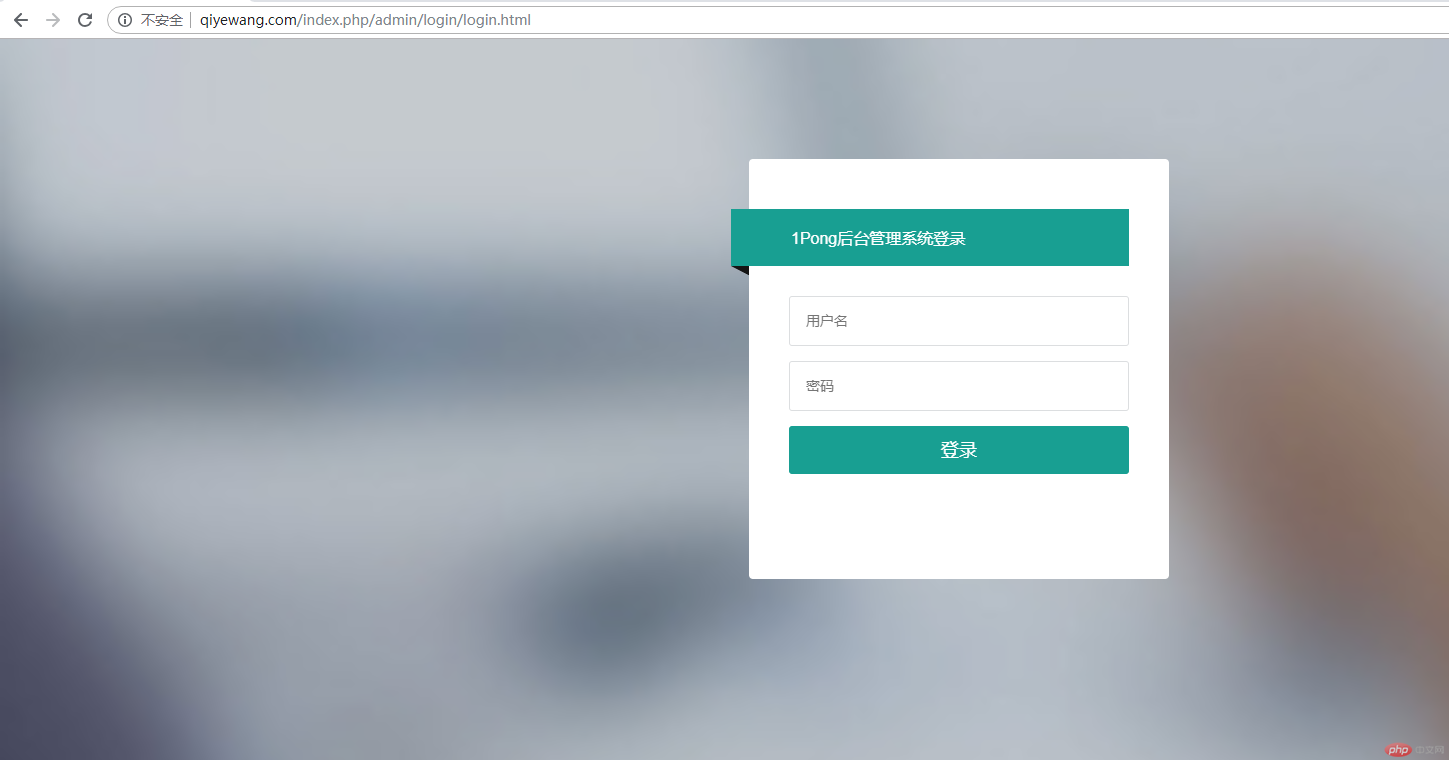
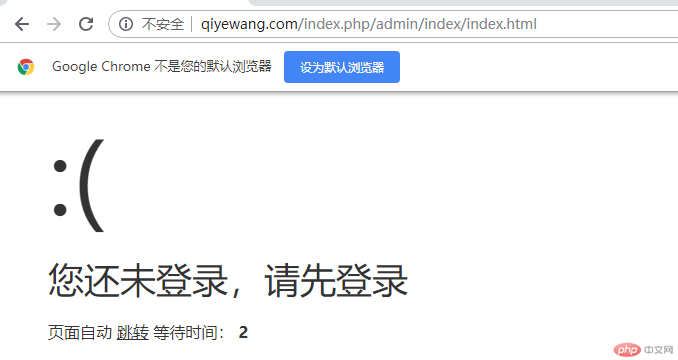
批改老师:天蓬老师批改时间:2019-05-14 17:49:44
老师总结:如果你用了模型, 就尽可能使用模型中的静态方法, 例如get来代替:$res= UserModel::where('username', $data['username'])->find();


